




Leather goods made in Italy
- Details
- Category: Leather goods made in Italy
- Hits: 117
Allora, parliamo di una situazione che definire un casino è dire poco. La crisi del Golfo di quest'anno, intendo quella scoppiata qualche mese fa nel 2026, ha dato una mazzata tremenda a tutto il comparto della pelletteria italiana, specialmente per i piccoli artigiani. Quelli che fanno la qualità vera, per intendersi, mica le multinazionali che c'hanno i paracadute finanziari.
Il problema principale è stato il blocco delle rotte commerciali e il costo delle materie prime che è schizzato alle stelle. Per un piccolo laboratorio di Firenze o delle Marche, che magari esportava il 70% della produzione nei mercati asiatici o negli stessi paesi del Golfo, trovarsi con le spedizioni bloccate o con costi di nolo raddoppiati è stato un dramma. Molti clienti stranieri hanno iniziato a disdire gli ordini perché non erano sicuri delle consegne, oppure chiedevano sconti che per noi artigiani significano andare in perdita.
Però, c'è un però. Gli italiani quando sono con l'acqua alla gola si inventano sempre qualcosa. Chi è riuscito a sopravvivere a questi primi mesi ha dovuto cambiare strategia di colpo. Si è tornati a guardare molto di più al mercato europeo e a quello americano, che fortunatamente tengono botta. E poi c'è stata una spinta pazzesca sulla digitalizzazione; anche il veccho artigiano che prima vendeva solo con le fiere adesso si è dovuto fare l'e-commerce o usare i social per vendere diretto al cliente finale, saltando gli intermediari.
Certo, la fatica è tanta e le istituzioni come al solito promettono aiuti che arrivano col contagocce. Ma la percezione del "Made in Italy" come lusso vero, fatto a mano, non è cambiata. La sfida ora è resistere quest'anno e capire come muoversi in un mondo dove la logistica non è più quella di prima. Ce la faremo? Secondo me si, ma che sofferenza.
- Details
- Category: Leather goods made in Italy
- Hits: 241
citiamo in questo articolo il racconto di una turista tedesca in visita a roma presso una bottega di prodotti in pelle private label nel 2017
"
Mi trovavo in una traversa di via Condotti, quel pomeriggio, quando sono entrato in un negozio di prodotti private label a Roma quasi per caso, attirato da una vetrina semplice ma elegante. La prima cosa che ha catturato la mia attenzione sono state le borse in pelle, esposte con un disordine studiato che trasmetteva un'immediata sensazione di spontaneità. La qualità della pelle si percepisce al primo sguardo: morbida, robusta, ben lontana dai materiali sintetici che si rovinano dopo pochi utilizzi, e caratterizzata da quel profumo intenso e autentico che ti resta sulle mani.
Le cuciture, pur non essendo geometricamente industriali, rivelano il fascino dell'imperfezione artigianale. Si capisce subito che non si tratta di pezzi in serie, ma di creazioni che mostrano una cura tangibile anche solo passando le dita lungo i bordi. Accanto alle tonalità classiche come il nero e il cuoio, spiccano sfumature più ricercate, tra cui un verde scuro quasi militare dal forte impatto visivo.
I modelli di questa linea di pelletteria private label sono essenziali, privi di loghi vistosi, ed è proprio questa sobrietà a renderli raffinati. Sono borse versatili, perfette sia per il lavoro sia per la sera, capaci di adattarsi a ogni occasione senza risultare fuori posto. Il design unisce estetica e funzionalità: alcuni modelli offrono tasche interne ben organizzate con cerniere fluide, altri puntano su un minimalismo caldo e accattivante.
Questa realtà dimostra come creare un brand con la formula del private label significhi investire sulla qualità del prodotto piuttosto che sul nome stampato sopra. In un certo senso, scegliere l'eccellenza della manifattura italiana senza l'aggravio economico della firma di lusso fa sentire l'acquirente decisamente più consapevole e soddisfatto.
."
- Details
- Category: Leather goods made in Italy
- Hits: 399
Fashion fairs in Europe represent an important platform for Italian designers, brands and industry professionals to present their collections and connect with a global audience. Events such as Paris Fashion Week, Milan Fashion Week and London Fashion Week attract millions of visitors every year, transforming cities into epicenters of style and trends.
When media and virtual contents reign supreme, you must distinguish yourself with real and authentic contacts, with physical relationships destined for a successful business centered on people and ad hoc products.
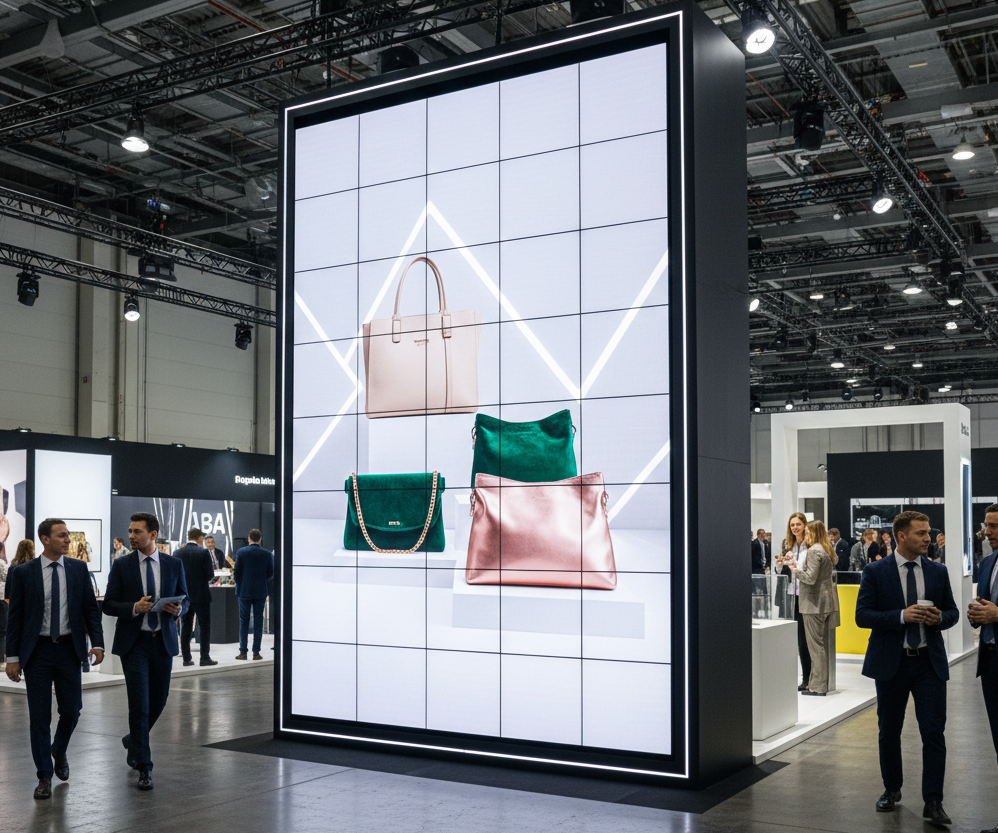
An emerging aspect in these events is the use of innovative technologies, such as eye-catching brochures and LED walls, which are revolutionizing product presentation. These light panels offer unprecedented visibility and can be used to create immersive environments, allowing brands to tell stories
- Details
- Category: Leather goods made in Italy
- Hits: 1207
In the world of leather goods, the differences between the various hides and the techniques for working with split leather are coupled with different films on the surface, allowing for a choice of finishes that can technically be achieved. The differences between the various types of calf are significant both for their physical characteristics and for practical applications.
Wrinkled Split Leather
Characteristics:
Wrinkled split leather, often simply called "split", is an unfinished leather, without a shiny finish. This type of leather is obtained from animals such as cattle or sheep.
It has an irregular surface, often with a visible texture and natural characteristics such as pores and marks, which gives it a "lived-in" and authentic appearance.
Split leather is generally less expensive than finished leathers and has a moderate resistance.
Use:
Wrinkled split leather is often used for items that require good breathability, such as shoes, bags, belts, wallets and jackets. It can also be used for fashion accessories and handcrafted leather goods.
It is preferred in informal or alternative contexts where the rustic and natural look is appreciated, such as in streetwear clothing.
Calfskin
Features:
Calfskin comes from very young animals (calves) and has a fine, soft grain, with a surface that is called "grain". It is treated according to the required characteristics to obtain various finishes, from shiny to matte.
It is known for its elegance, softness and resistance. Calfskin is often more expensive than split leather and is considered a high-quality leather.
Uses:
Calfskin is commonly used for elegant clothing, handbags, belts, high-fashion wallets, shoes and luxury leather goods. It is ideal for products that require a refined and durable look.
Due to its elegance, it is often used in formal settings and for high-end items, such as accessories for business or special occasions.
Conclusion
The choice between wrinkled split leather and calfskin depends on the intended use and the desired aesthetic. While split leather is more suitable for a rustic and casual look, calfskin is better suited to more formal situations and high-end products. In general, the quality, workmanship and final appearance of the item will influence the decision in choosing the leather.
- Details
- Category: Leather goods made in Italy
- Hits: 829
The history of leather and tanneries in Florence has deep roots, dating back to the Middle Ages. As early as the 13th century, the city was known for its ability to treat hides, thanks to the presence of the Arno River, which provided essential water for the tanning process. The first tanneries were located in the Santa Croce district, where master tanners developed innovative techniques that led Florence to become a center of excellence in leather production.
In the 15th century, during the Renaissance, the art of tanning reached a peak of quality and prestige. Florentine goods, especially worked leather, were exported throughout Europe. Leather from Florence was highly prized for its softness and durability, used in fashion, leather goods and art.
The Florentine artisan workshops not only focused on the production of fine leathers, but were also places of innovation, where artisans experimented with new materials and techniques. The introduction of natural pigments allowed for a wide range of colors, making Florentine leather a symbol of luxury and refinement.
However, the advancement of the tanning industry also led to environmental issues, with the Arno River suffering significant pollution from the manufacturing processes. In recent decades, the industry has sought to balance tradition with more sustainable practices.
- Details
- Category: Leather goods made in Italy
- Hits: 850
The Romagna company Campomaggi is aiming for the USA. The positive export trend in 2022 pushes big brands to evolve and grow in new continents, an unthinkable action in the 90s.
The company specializing in made in Italy leather goods at the head of the CAMPOMAGGI and CATERINA LUCCHI brands closes its 2022 turnover at 23 million euros, growing by 8% and forecasting growth of 6/8%, focusing on the American market.
“This year is a little different because inflation has slowed down consumption but, at the same time, a clear growth is emerging in the USA regarding the Campomaggi brand compared to other areas such as Europe and the UK, where historically we have always had good results,” the founder told Pambianconews. As evidence of this, the company is investing in the brand of the same name, strengthening the e-commerce channel of which it has become the main country.
PELLETTERIA FIRENZE - WHOLESALE AND PRIVATE LABEL
Customization can be done in different ways. For example, you can choose the color of the leather, the type of stitching, the design of the product and the finishing touches. It may also be possible to add initials, monograms or other personalized details on the product.

The customization of the items, together with the accessories (buckles, zip pullers, etc.), internal linings, etc. can be done according to the customer's choices with branding, digital, studded, metallic glitter, prints, thread.
All the various production phases are followed step by step with careful and rigorous quality controls. Starting from the development of the models, moving on to the design and then ending with the production of high quality leather goods.